Zambia: AfDB backs 20 MW Garneton North solar project
The African Development Bank will provide USD 14.54 million in financing for Zambia’s 20 MW Garneton North solar project, part of the country’s GETFiT program to scale decentralized renewables.
The African Development Bank (AfDB) has approved a USD 14.54 million financing package to support the development of the Garneton North 20 MW solar project in Zambia’s Copperbelt Province, reinforcing the country’s renewable energy ambitions and addressing its persistent electricity deficit.
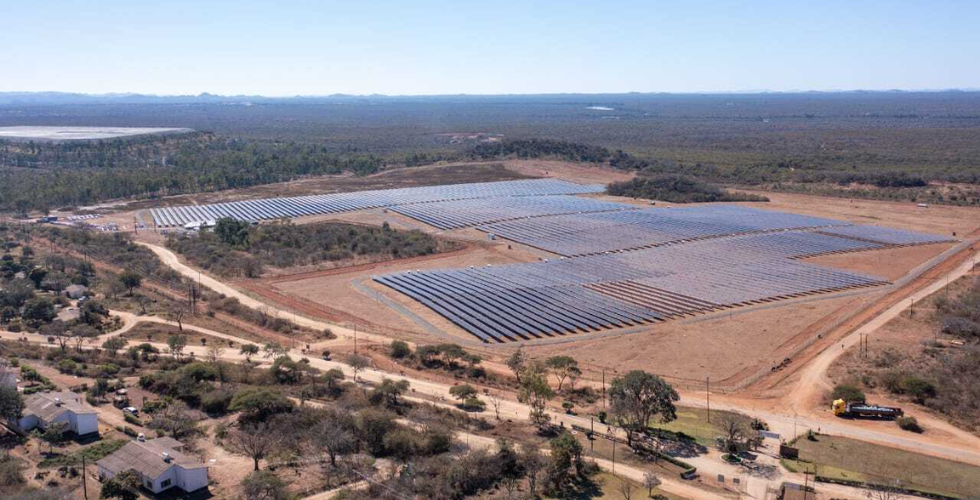
The project, with a total cost of USD 24.5 million, will design, build, operate, and maintain a 20 MW solar power plant, connected to the national grid via a 10 km, 33 kV transmission line. Once operational, it is expected to supply clean and reliable electricity to 82,000 people, while avoiding 58,740 tonnes of CO₂ emissions annually.
The AfDB financing includes USD 7.27 million from its own resources, complemented by an equal concessional tranche from a Development Finance Institution, underlining the Bank’s commitment to closing Zambia’s energy gap and supporting the Mission 300 initiative, which targets electricity access for 300 million Africans by 2030. Zambia was among the first nations to launch a national energy compact under this mission in January 2025.
“The Garneton North Solar Project is an example of how blended finance can unlock investment for resilient, low-carbon power generation in Africa. It will deliver clean electricity where it’s needed most — powering industry, supporting livelihoods, and building confidence in Zambia’s renewable energy market.”
— Wale Shonibare, AfDB Director, Energy Financial Solutions
Electricity generated by the plant will be purchased under a 25-year take-or-pay Power Purchase Agreement (PPA) by Zambia Electricity Supply Corporation Limited (ZESCO), providing long-term revenue visibility and strengthening investor confidence in the country’s power sector.
Dimension | Deal details |
|---|---|
Project Name | Garneton North Solar Project |
Installed Capacity | 20 MW |
Location | Garneton North, Copperbelt Province, Zambia |
Developer / SPV | InnoVent Garneton North Solar Ltd (subsidiary of InnoVent) |
Financier | African Development Bank (AfDB) |
Financing Value | USD 14.54 million |
Structure | Blended debt – USD 7.27m AfDB ordinary capital + USD 7.27m concessional co-financing |
Off-taker | Zambia Electricity Supply Corporation (ZESCO) |
PPA Duration | 25 years |
Commissioning Target | 2027 |
Primary Benefit | Reinforces energy supply for households & industries in Copperbelt region |
SDG Alignment | SDG 7 (Affordable & Clean Energy), SDG 13 (Climate Action) |
According to Wale Shonibare, AfDB’s Director of Energy Financial Solutions, Policy, and Regulation, the project marks “a milestone for Zambia’s energy transition,” reinforcing investor trust and catalyzing further private-sector participation in renewable energy.
Part of Zambia’s GETFiT program to mobilize private capital
The Garneton North Solar Project is one of six renewable energy projects selected under Zambia’s Global Energy Transfer Feed-in Tariffs (GETFiT) program, designed to unlock private investment in small- and mid-scale renewables. The initiative aims to procure 120 MW of new renewable capacity, diversify the country’s energy mix, and strengthen its resilience against hydropower fluctuations.
During construction, the project will create 90 jobs, including 50 for youth and 5 for women, and maintain 10 permanent positions during operations. Beyond clean energy generation, the plant is expected to reduce power outages, improve grid stability, and bolster energy access across the Copperbelt region.
Jing Li, Division Manager for Energy Financial Solutions at AfDB, emphasized that the project exemplifies Zambia’s commitment to diversifying beyond hydropower while maintaining cost-reflective tariffs and advancing energy security.
Aligned with AfDB’s Ten-Year Strategy (2024–2033) and the New Deal on Energy for Africa, the project supports low-carbon growth, universal energy access, gender inclusion, and youth employment, reinforcing Zambia’s position as a regional leader in renewable energy development.